Guide · Groups and families
Sharing a house with another family.
It goes wrong in the same four places every time, and all four are settled by one conversation before anybody pays a deposit.
By The Collingview · Published · Updated
Before you book
The ten minutes that saves the week.
Five tips for a shared vacation. All awkward in advance, and considerably less awkward than the alternative.
Settle the money in writing, before the deposit
When it comes to splitting costs, split by household when the households are similar in size. Where they are not — two adults alongside a family of five, split the accommodation by bedroom and the food per adult, which most people find fairer than either pure option.
Collect every share before you pay the deposit, not on arrival. Put groceries on one card and settle up at the end, not tracking receipts all week. Nobody has ever regretted being explicit about this and a great many people have regretted the opposite.
Allocate the bedrooms while nobody is standing in them
Every house has one obviously best room, and whoever booked usually takes it by default, which is remembered. Decide before you arrive, and prioritise by need rather than seniority: the family with the baby needs the room nearest a bathroom, the teenagers need to be far from the adults, and whoever gets up at six needs to not be next door to whoever sleeps until ten.
Decide whether you are eating together
The default assumption, that everyone eats every meal together — is what makes shared holidays tiring. Most groups end up happiest with a stated pattern: breakfast is on your own, lunch is whenever, and dinner is shared with a named cook each night.
Assign the cook rota before you go. Two families both waiting for the other to start dinner at seven is a specific kind of misery.
Say the quiet part about bedtimes and noise
One family puts children down at seven and one lets them run until ten. Both are fine; the collision is not. Agree where the late family will be after nine: a separate sitting room, the deck, downstairs, and the whole problem disappears. This is the single strongest argument for a house with more than one living room.
Agree what you are not doing together
Write down one afternoon where the two families split up and do different things. It feels unnecessary when you plan it. By day three it is the thing everyone is quietly grateful for.
What to look for
Bathrooms beat bedrooms, every time.
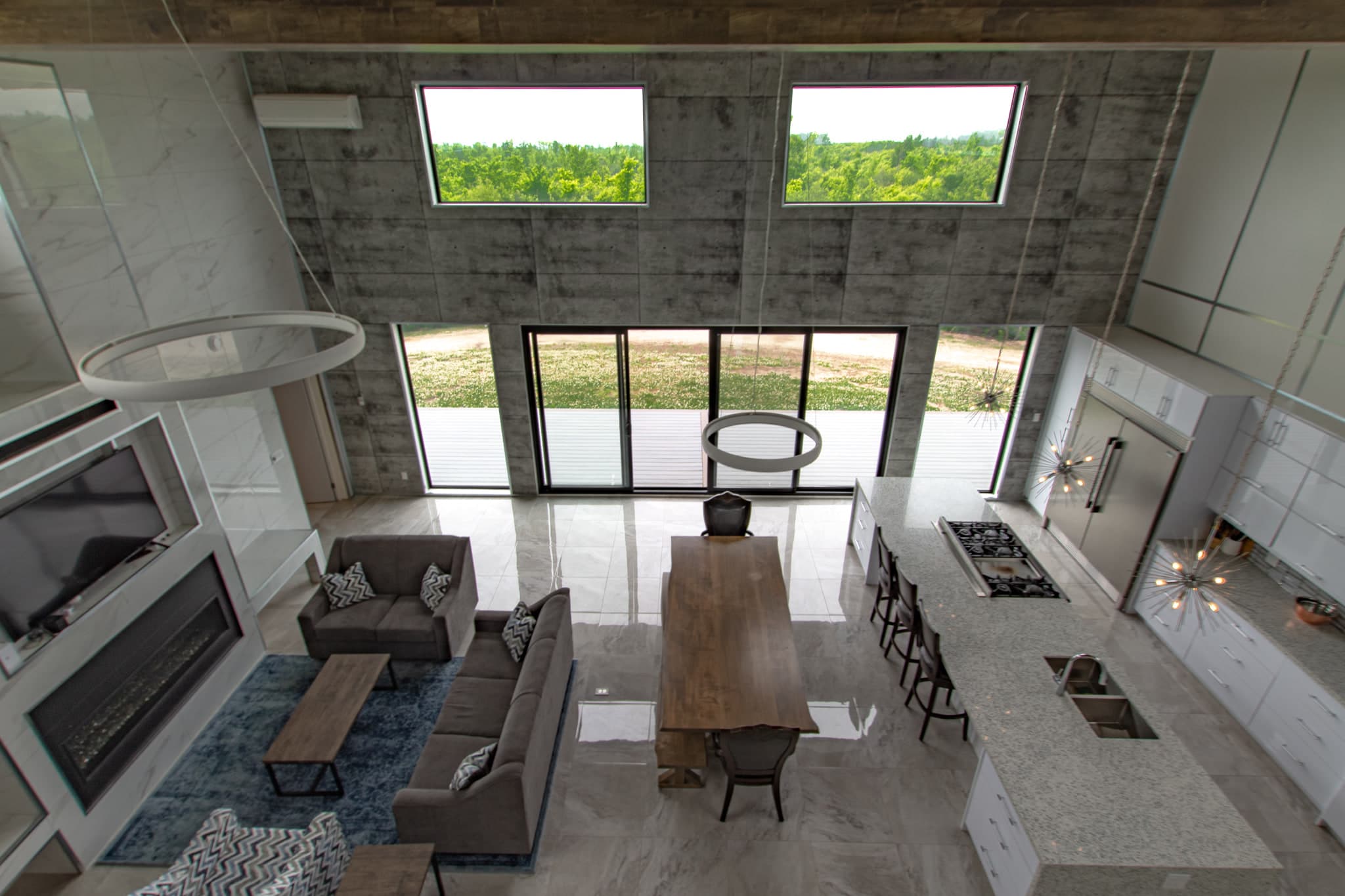
Listings sell bedroom counts because bedroom counts are easy to compare. For two households sharing, the bedroom count is close to irrelevant beyond “everyone has one”. What determines whether the week is pleasant is the number of places people can be apart.
Bathrooms first. One per three or four people is where mornings stop being a queue. One per household is where nobody feels like a guest in someone else’s holiday.
Then kitchens. A second kitchen or kitchenette is the most underrated feature in group accommodation. It lets an early riser make a bottle at six without waking anyone, and it stops two families competing for one stove at dinner time.
Then sitting rooms. Two is transformative, three is luxury. One room, however large, means the whole group shares one television, one noise level and one bedtime for a week.
Then separation of sleeping. Bedrooms split across wings or floors, rather than a corridor of identical doors, is what lets one family go to bed while the other stays up.
And one thing nobody thinks about until they need it: a laundry. Any holiday with small children in it is a holiday with laundry in it.
Three generations
When grandparents are coming too.
A multigenerational trip is a different problem from two families of the same age, and a harder one to book for.
- Stairs are the whole question
- Most large holiday houses are large because they go upwards. Ask specifically whether there is a bedroom and a bathroom reachable without stairs, and ask for the answer as a description of the route, not as the word "accessible".
- An elevator changes the shortlist
- Rare in holiday houses and worth looking for specifically if anyone in the party cannot manage two flights. It also solves luggage, groceries and a pushchair, which nobody mentions in the listing.
- Ground-level rooms and doors
- A bedroom that opens straight onto level ground is worth more than one with a better view. Ask about thresholds and door widths if anyone uses a walker or a chair.
- Quiet is not optional
- Grandparents and small children keep opposite hours. The separation that makes two families work is what makes three generations work, only more so.
- Ask before you book, not after
- Any operator worth booking would rather answer five specific questions than have somebody arrive and find they cannot get to a bathroom. If the answers come back vague, that is your answer.
Family reunions
More people than beds.
A reunion is a different shape again: often more people than any one house sleeps, spread across more households, with a wider age range and one or two people who have not seen each other in a decade.
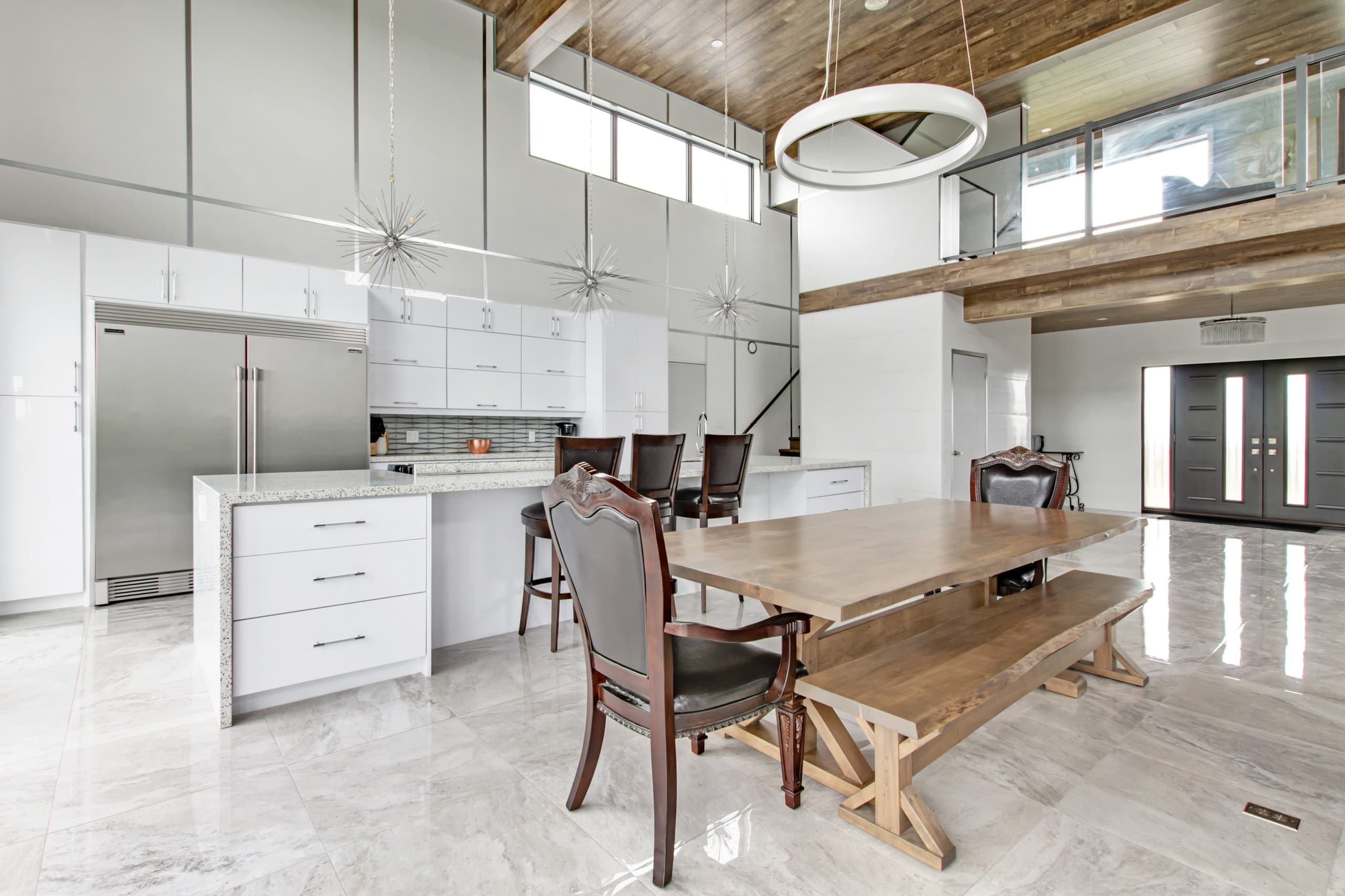
The pattern that works is a house as the anchor instead of the container. The extended family sleeps across a house and nearby accommodation, and the house becomes the place everybody comes to during the day and for meals — which means you should be choosing for the size of the table, the kitchen and the outdoor space, not for the number of beds.
Two practical warnings. First, the number of people who visit a property during the day is very often governed by the rental agreement, insurance and the local municipality, so ask the owner directly before you invite thirty people to a house that sleeps twelve. Second, if the gathering is really an event, not a holiday, say so when you enquire. Most owners would much rather plan it with you in an email than discover it on the day.
Bring both families.
Tell us who is coming: how many households, how many children, and whether anyone would rather not take stairs. We will tell you honestly how the house divides for your group.
Questions about sharing a house
- How do two families fairly split the cost of a house?
- Split by household when the families are roughly the same size, and per adult or by bedroom when they are not. Agree it in writing before anyone pays, including what happens if one family drops out, collect every share up front, and put groceries on one card that gets settled at the end.
- How many bathrooms do you need for a group?
- Roughly one per household is where nobody feels like a guest, and fewer than one for every four people is where mornings turn into a line-up. That is why, when two families share, the bathroom count matters more than the bedroom count.
- What should two families agree before sharing a rental?
- Four things: how the cost is split, who takes which bedrooms, whether meals are shared or separate, and what happens about bedtimes and noise. Ten minutes of conversation before you book prevents almost every problem that shows up on day two.
- What should be on a cottage packing list?
- Assume nothing beyond beds, towels and a working kitchen, and ask the owner what is provided. The things groups forget most: enough coffee for everyone, a decent knife, garbage bags, a first-aid kit, layers for cool evenings even in July, and indoor shoes.
- How do you plan a family reunion?
- Pick the house before the date if the group is large, because availability is almost always the constraint. Then settle three things early: who is paying for what, who is cooking which nights, and what happens if it rains for three days.
- Is a house with two kitchens actually useful?
- Very. A second kitchen or kitchenette means a family with a baby can do a six a.m. bottle without waking the house, and the family who eats at nine is not competing for the stove with the family who eats at six.
- How long should a multi-family holiday be?
- Three to five nights. Two is barely enough to justify the packing; beyond about five, small irritations start to add up unless everyone knows each other very well.