Corporate and executive retreats
A company retreat somewhere a team can think, and then stop.
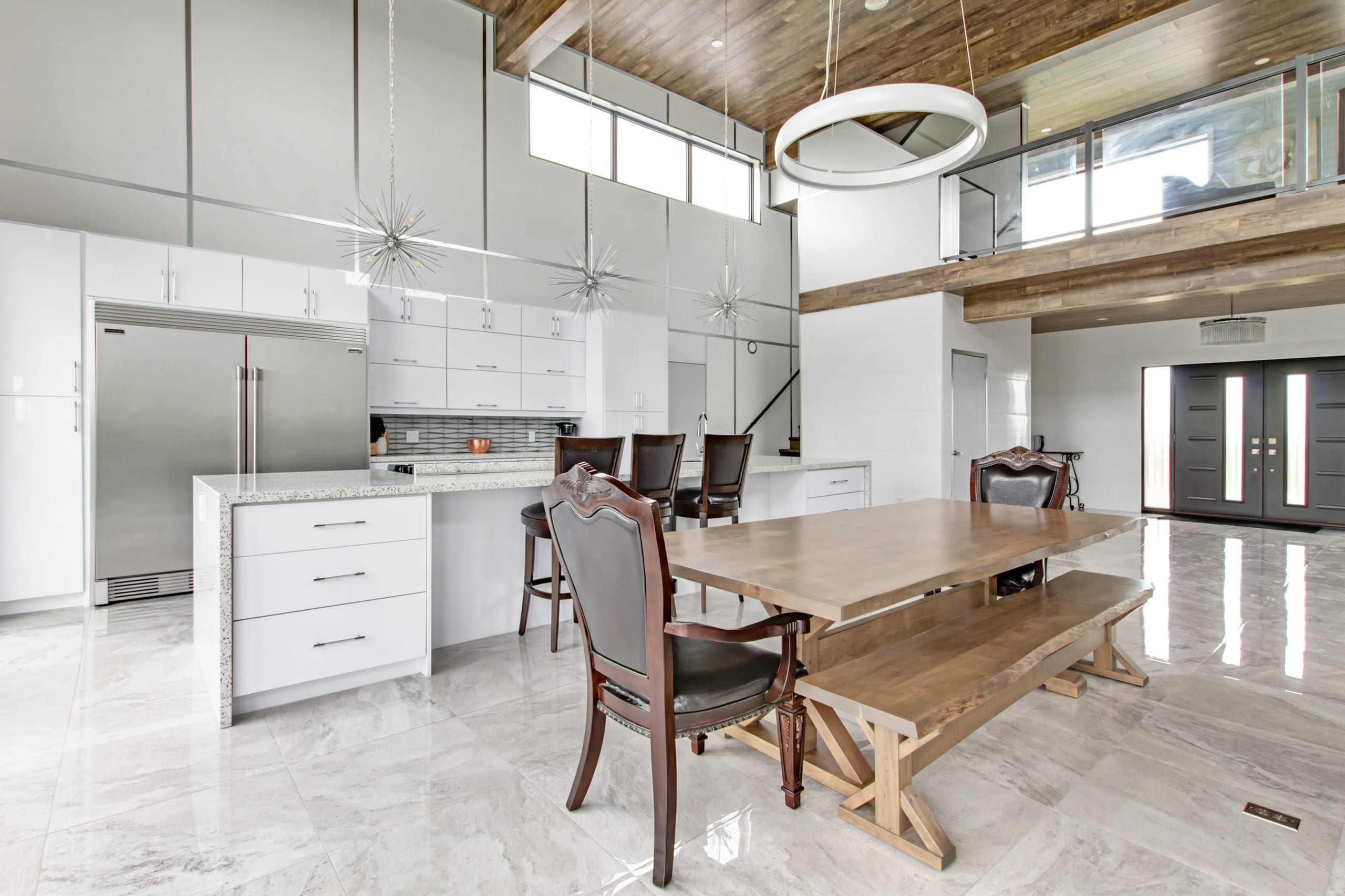
A private architectural house about two and a half hours from Toronto: one long table for the morning, three separate rooms for the conversations that split off, and a rooftop terrace above the escarpment for the part of the retreat that does the real work.
Plan your retreatThe case for it
Not a hotel, and that is the point.
Most retreat venues are hotels with a meeting floor attached, and a conference room in a resort produces conference-room conversations. People stay in role, keep their laptops open, and leave with the opinions they arrived with. Somewhere private, where the team cooks, eats and sits around one table, tends to produce a different two days. The location does half of that work: the house sits on top of a hill at the end of its own drive, with nothing next door.
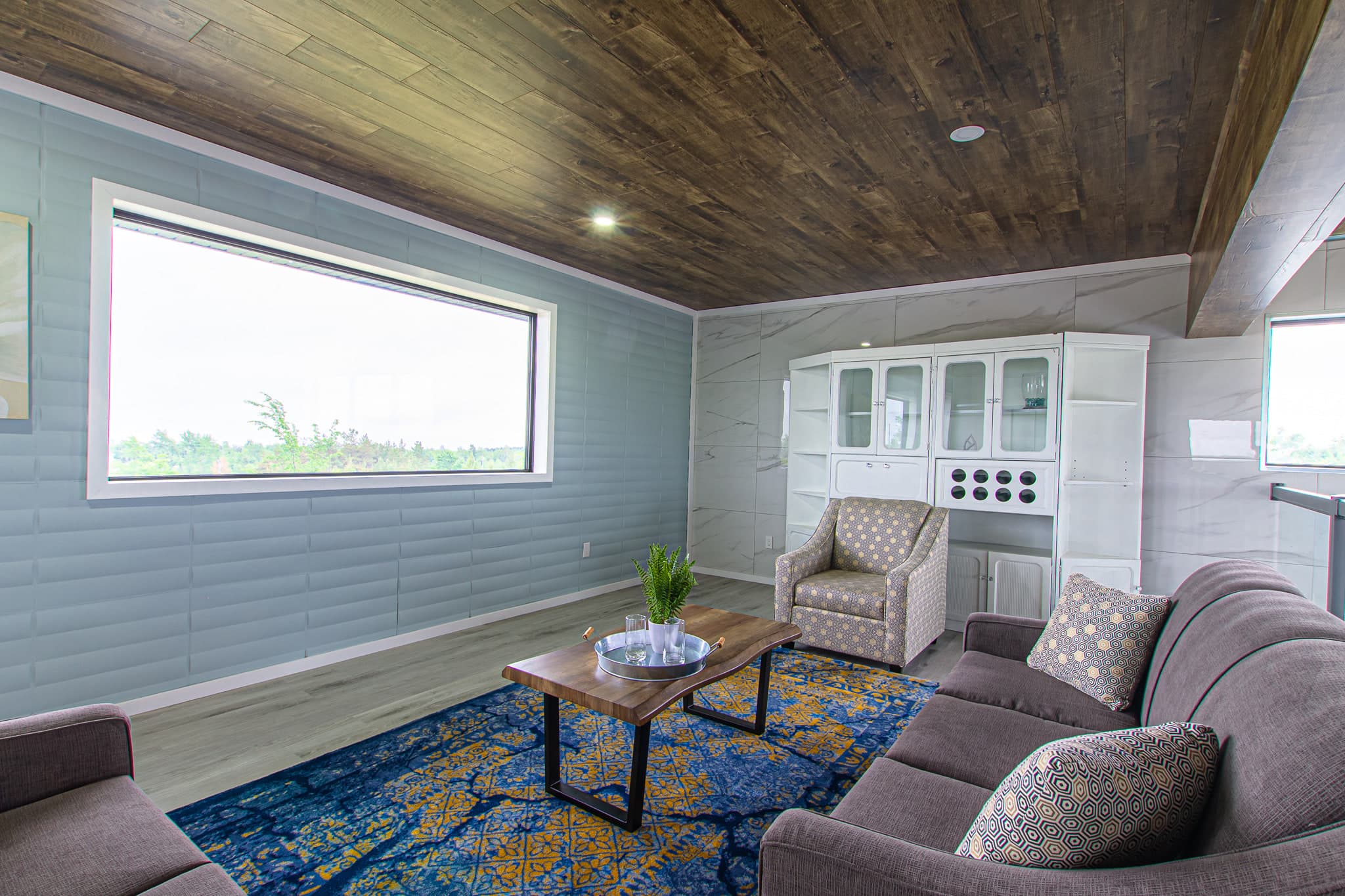
The house gives you a long timber table with the kitchen island alongside it, so the working session and the meal happen in the same room. Upstairs there is a second sitting room, quieter and away from the main floor, which is where the two people who need to work something out will end up. The loft has a table tennis table, which is less a facility than a pressure valve.
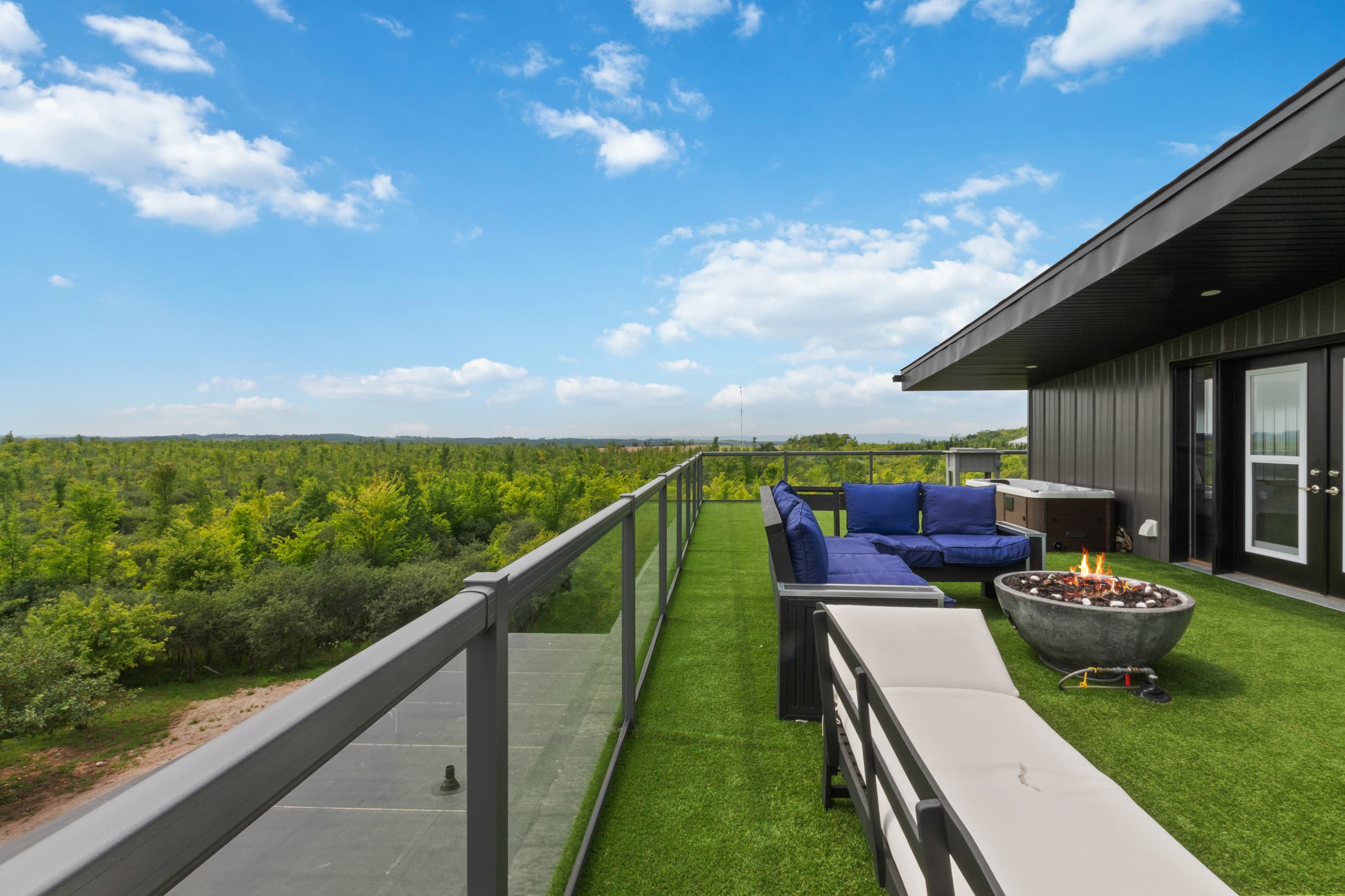
And then there is the roof: a hot tub, a fire bowl, a barbecue, and the escarpment running across the horizon. Whatever the agenda says, that is where the second evening goes, and it is usually where the useful conversation happens. The luxury here is not a spa menu. It is a hot tub on the roof and nobody else in the building.
Who books it
Small teams, real decisions.
Leadership groups doing their annual planning, or a quarterly strategy session that needs more than an afternoon. A senior management team or the C-suite working through a strategic plan. Startup founders deciding what to stop doing. A board of directors that wants a day away from a downtown room. Partners at a professional firm, or the owners of a family business, who need a conversation that does not fit inside a meeting.
Smaller groups with a narrower job suit it too: a sales team setting next year’s targets before the kickoff, or an entrepreneurs’ peer group on its annual trip. So does a nonprofit organization — a charity’s board, the executive of a professional association, or a volunteer leadership group planning its year.
It is a good place to hold a retreat when the group is small enough to sit at one table. If you need breakout rooms, a projector and a catering team, a resort will serve you better, and we would rather say that now than have you discover it on arrival.
Planning notes
Retreat planning runs on specifics. We would rather leave a line blank than fill it with something we have not checked.
- Getting there
- The house is outside Meaford, Ontario, about 25 to 30 minutes from Blue Mountain village. About 177 km from Toronto, roughly 2¼ to 2¾ hours depending on traffic. About 28 km from Collingwood along the shore.
- Working space
- A dining table for twelve beside the kitchen, a second upstairs sitting room, and a games loft. No boardroom and no AV.
- Internet
- Wi-Fi throughout the house. We do not publish a speed; if a video call depends on it, ask and we will run a test before you book.
- Group size
- Eight to twelve, across four bedrooms and four bathrooms. Tell us the shape of the team and we will say how the house divides.
- Catering
- Self-catered, with a full kitchen and a gas range. We can point you at local options.
- Midweek
- Usually the most available and the best value. Worth asking about first.
- Invoicing
- We invoice the company directly, with HST shown. Payment in full confirms the booking; tell us if you need a purchase order number on it.
Off the agenda
The best hour of most retreats is not on the agenda.
It is the one after dinner, on the roof, when the day is finished and nobody is presenting anything. Every agenda we have seen work leaves room for it.
What guests say
Really productive couple of days for our team. Being away from the office meant people weren't disappearing between meetings or getting pulled into other things. We could focus, finish what we needed to do and then relax together afterward.
We brought our leadership team here for a couple of days and it was exactly the change of environment we needed. We got a surprising amount accomplished during the day, but the best part was being able to switch off afterward, make dinner together and just talk. It felt much more personal than doing another retreat at a hotel.
The bookings that go best have one hard question to answer. A leadership group setting a year. A marketing team deciding what to stop doing. A founding team who need a brainstorming session and somewhere to go afterwards. If you are looking for somewhere in cottage country, within a morning’s drive of Toronto, to take employees for two days, a big house with one long table does something a conference floor does not — everybody stays in the room. And some groups come with no agenda at all: a team getaway after a hard quarter, paid for by the company, with the staff left to do nothing much.
Plan your retreat.
Tell us the dates, the size of the team and what the two days are meant to achieve. We will come back with availability and a straight answer on whether the house fits.
Keep reading
- How to plan a company retreatThe format that works, what it costs, and when a resort is the better call.
- The drive from TorontoWhich route suits which side of the GTA, and when to leave.
- The houseThe rooms your team would be using.
- Group staysHow the sleeping and the kitchens divide up.
- The areaWhere to eat, and what to do with a free afternoon.
- Rates and how we quoteHow a company booking is quoted, and what moves the number.
- AboutWho answers the enquiry, and what happens after you send it.
- Midweek and short staysTeams travel on working days anyway, and midweek is where the budget goes further.